

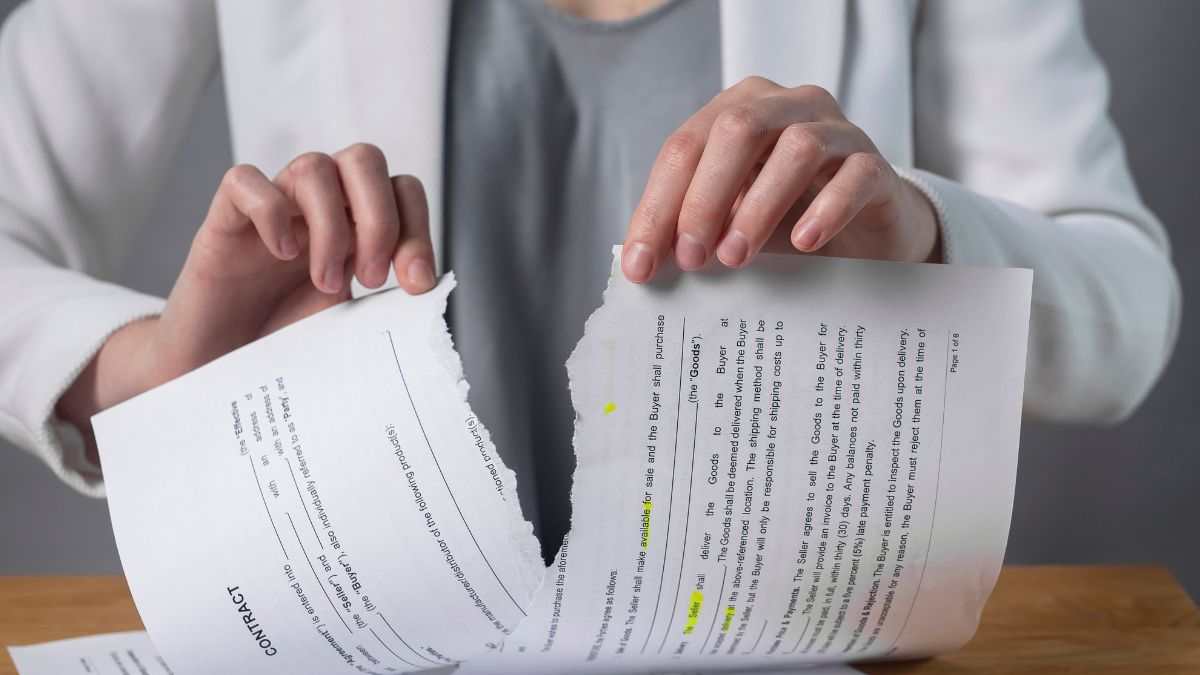
What Can You Do If Someone Breaches a Contract?
A customer fails to pay. A supplier misses an important delivery date. A contractor walks away before completing the agreed work. Whatever form it takes, a breach of contract can disrupt cash flow, delay projects and place a valued business relationship under strain.
Your first reaction may be to terminate the agreement or demand compensation. Acting too quickly can create further problems, particularly if the contract contains a notice procedure or the breach is not serious enough to justify termination.
The legal remedies for breach of contract depend on what the agreement says, what has gone wrong and what outcome you want to achieve. Compensation is the most common remedy, although termination, debt recovery, injunctions and specific performance may also be available in certain circumstances.
This guide explains the main remedies for breach of contract under the law of England and Wales and the practical steps you should consider before taking action.
What is a breach of contract?
A breach of contract happens when one party fails to comply with an obligation under a legally binding agreement.
This could involve failing to pay an invoice, delivering goods late, providing defective work, disclosing confidential information or refusing to complete an agreed service.
The agreement may be written, verbal or formed through the conduct of the parties. Where there is no written contract, proving exactly what was agreed can be more difficult.
The nature of the breach matters. A minor failure may give rise to a claim for compensation without allowing the contract to be terminated. A sufficiently serious breach may allow the affected party to bring its future contractual obligations to an end and claim damages. The precise position depends on the contractual wording, the importance of the term and the effect of the breach.
A breach can also be anticipatory. This may arise where one party indicates before performance is due that it will not meet its contractual obligations.
Check the contract before taking action
Start by reading the contract carefully.
Look for clauses dealing with:
- The obligation that may have been breached
- Payment and delivery
- Performance standards
- Notice requirements
- Opportunities to remedy a breach
- Suspension of services
- Termination
- Dispute resolution
- Limits or exclusions of liability
- Governing law and jurisdiction
A contract may require you to give written notice in a particular way. It might also give the other party a specified period in which to put matters right.
Follow these requirements carefully. A notice sent to the wrong address, delivered by an unauthorised method or written without the required information may be ineffective.
You should be particularly cautious before terminating the agreement or suspending your own performance. If you end a contract without a valid right to do so, your actions could amount to a breach and expose your business to a counterclaim.
What are the main legal remedies for breach of contract?
The appropriate remedy will depend on the contract, the seriousness of the breach and the commercial outcome you are trying to achieve.
Damages
Damages are the most common remedy for breach of contract. Their general purpose is to compensate the affected party for recoverable loss caused by the breach.
- Depending on the circumstances, a claim could include:
- Money due under the contract
- Reasonable additional costs caused by the breach
- The cost of replacement goods or services
- Lost profit, where it can be proved and is legally recoverable
The claimant must show that the breach caused the loss. The claimant is also expected to take reasonable steps to limit avoidable losses, which is often called the duty to mitigate.
Some contracts contain an agreed damages clause setting out what will be payable following a particular breach. Whether the clause can be enforced will depend on its wording and legal effect.
Termination
Termination brings the parties’ future contractual obligations to an end, subject to rights and obligations that have already accrued.
A right to terminate may arise from an express contractual provision or a sufficiently serious breach under common law. The contract may require written notice and give the defaulting party time to put matters right.
The existence of a breach does not necessarily provide a right to end the agreement. Wrongful termination can itself amount to a breach, so take advice if your right to terminate is unclear.
Debt recovery
If the breach involves failure to pay a fixed and undisputed sum, the appropriate remedy may be a debt claim.
For example, a business may have completed the agreed work and issued a valid invoice, yet the customer has failed to pay by the contractual deadline. The business may seek payment of the outstanding debt, together with any recoverable interest and costs.
A disputed invoice may involve wider contractual questions, such as whether the work met the required standard or whether the amount charged was properly due.
Specific performance
Specific performance is a court order requiring a party to carry out a contractual obligation.
It is a discretionary remedy, so an order is not granted automatically. It may be considered where financial compensation would not provide an adequate solution. It is generally less suitable where the order would require continuing court supervision or force someone to provide personal services.
Injunctions
An injunction is a court order that requires someone to stop certain conduct or, in some circumstances, take a particular action.
- In a commercial contract dispute, an injunction might be considered where a party is:
- Threatening to disclose confidential information
- Using intellectual property in breach of an agreed licence or contractual restriction
- Acting in breach of a restrictive obligation
- Taking action that could cause serious harm before the dispute is resolved
Injunctions are discretionary remedies and applications can be urgent. The court will consider several factors, including whether damages would provide an adequate remedy. If urgent protection may be required, take legal advice promptly and preserve the relevant evidence.
Common examples of breach of contract and possible remedies
The following examples show how different remedies may apply in common commercial situations.
These examples provide a general guide. The remedy available in any particular dispute will depend on the contractual terms, the facts, the evidence and the outcome the affected business wants to achieve.
A customer fails to pay an invoice
Where a business has provided the agreed goods or services and the customer fails to pay, the outstanding amount may be pursued as a debt.
Depending on the circumstances, the business may also be entitled to claim interest and debt recovery costs. Check the payment terms and any correspondence disputing the work or amount before taking action.
A supplier delivers late or provides defective goods
A business may incur additional costs because goods arrive late or fail to meet the agreed specification.
Possible remedies could include requiring the supplier to correct the problem, obtaining replacement goods or seeking damages for recoverable losses. Termination may also be available if the contract and seriousness of the breach allow it.
A contractor abandons a project
If a contractor leaves before completing the agreed work, the customer may need to appoint someone else to finish it.
The reasonable additional cost of completing or correcting the work may form part of a damages claim. The circumstances and contractual wording will determine whether the agreement can also be terminated.
Confidential information is disclosed
Where confidential information is used or disclosed in breach of contract, compensation may not provide enough protection if further disclosure is threatened.
An injunction may be considered to prevent further use or disclosure. Legal advice should be taken promptly because applications of this kind can be urgent.
How much compensation can you claim for a breach of contract?
There is no standard amount of compensation. The value of a claim depends on the loss caused by the breach, the contract terms and the available evidence.
Relevant factors include:
- Whether the breach caused the loss
- Whether that type of loss was reasonably foreseeable
- Any valid limitation of liability
- Steps taken to reduce avoidable losses
- Whether an agreed damages clause applies
Each amount claimed must be supported by evidence, such as invoices, receipts or financial records.
What should you do when a contract is breached?
A measured response can help protect your position and improve the prospects of resolving the dispute.
1. Establish what was agreed
Review the contract, terms of business, order forms, proposals and any agreed variations. Identify the obligation that may have been breached.
2. Preserve the evidence
Keep relevant contracts, emails, invoices, purchase orders, delivery records, meeting notes and correspondence about the breach. Avoid altering original documents.
3. Record the financial impact
Keep evidence of additional costs, replacement services, delayed work and lost orders. Record how each amount has been calculated.
4. Limit avoidable losses
Consider what your business can reasonably do to prevent the situation from becoming more expensive. This might involve sourcing replacement goods or allowing the other party an opportunity to correct the problem.
5. Communicate carefully
Explain the issue clearly, refer to the relevant contractual terms and state what needs to happen. Follow any notice requirements in the agreement.
Avoid making unsupported allegations or promising action that you may not be entitled to take.
6. Consider ways to resolve the dispute
The contract may require negotiation, mediation or another dispute resolution process.
Where court action is being considered, the parties are generally expected to exchange enough information to understand each other’s positions, consider settlement and explore appropriate alternative dispute resolution. The court may consider compliance with pre-action requirements when dealing with case management and costs.
7. Get advice before taking an irreversible step
Seek legal advice before terminating the agreement, suspending performance, applying for an injunction or starting court proceedings.
Early advice can help you identify the available remedies, comply with notice requirements and avoid weakening your position.
How long do you have to bring a breach of contract claim?
In England and Wales, a claim founded on a simple contract is generally subject to a six-year limitation period from the date the cause of action accrued. A claim based on a contract made by deed is generally subject to a twelve-year period.
These are general limitation periods. Identifying when a cause of action accrued can require careful analysis, and different rules may apply in some circumstances. A contract may also contain much shorter deadlines for giving notice of a claim.
Do not treat the general limitation period as a reason to wait. Delay can make documents harder to locate, affect witness recollection and allow losses to increase.
When should you speak to a solicitor?
Consider speaking to a solicitor where:
- A significant payment or contract value is involved
- The other party denies the breach
- The contract contains detailed notice requirements
- You are considering terminating the agreement
- The breach is causing continuing loss
- Confidential information or intellectual property is at risk
- Negotiations have stalled
- Court proceedings have been threatened
- Preserving the business relationship remains important
At Harry Suleman Solicitors, we begin by understanding what has happened and what your business needs to achieve.
That may involve recovering money, bringing the contract to an end, protecting confidential information or finding a commercial solution that allows the relationship to continue. We can review the agreement, explain the remedies that may be available and help you decide on a proportionate next step.
Taking the next step
A breach of contract can put pressure on your finances, operations and important business relationships.
The right response depends on the terms of the agreement, the seriousness of the breach and the outcome you want. Checking your position before terminating the contract or issuing proceedings can prevent an already difficult situation from becoming more complicated.
If someone has breached a contract with your business, speak to Harry for clear, practical advice on your options. You can also visit our Commercial Litigation page to learn more.
This article provides general information about the law of England and Wales. It is not a substitute for advice about your specific contract or dispute.